Centre Pompidou

Why visit

Who will love it

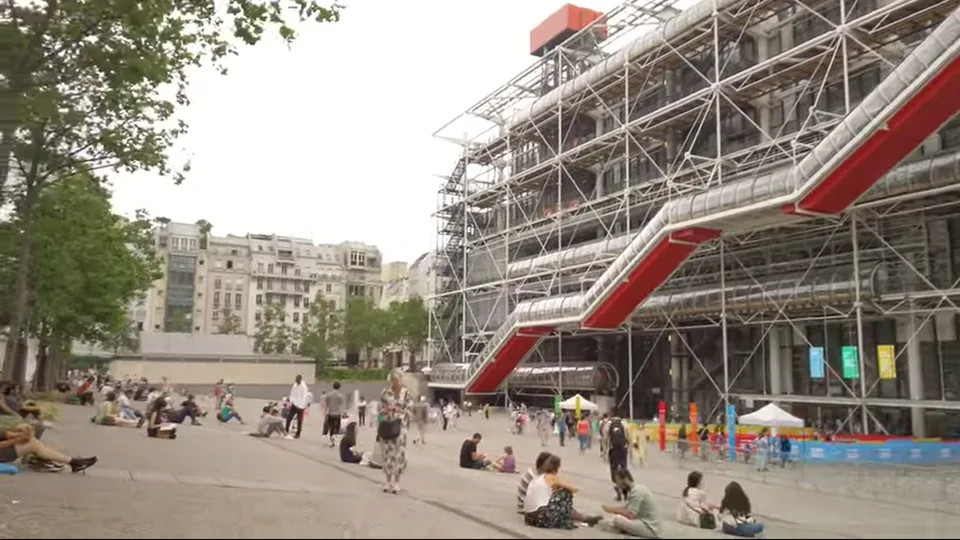
Prioritize Centre Pompidou if you care about modern architecture, Paris’s late-20th-century cultural landmarks, or want to see the famous “inside-out” façade in person.

It still works as a short stop in the 4th arrondissement: the exterior, the Beaubourg square, and the Stravinsky Fountain next door make sense for a 30–60 minute visit from Rambuteau or Hôtel de Ville.

Who should skip it

Lower it on your list if you were coming for the full museum collection, major galleries, or a long indoor art visit: the main building at Place Georges-Pompidou is closed for renovation until 2030, so this is not a proper museum stop right now.

Practical take: treat Pompidou as an architecture-and-neighbourhood detour, not a priority attraction unless the building itself is the reason you want to go.

What to know beforehand

[ { "attraction": "Centre Pompidou", "summary": "Centre Pompidou is a landmark for 20th and 21st-century art and radical architecture, but the main building is currently closed for a major renovation.

The current value lies in the iconic 'inside-out' facade, the vibrant atmosphere of Place Georges-Pompidou, and the nearby Stravinsky Fountain.

This is a short 30–60 minute stop rather than a museum replacement; the permanent collection is currently housed at temporary venues across the city.", "body": "• Essence — A museum of modern and contemporary art in a radical building; known for its engineering-forward design and city views.\n• Key Detail — The main building is closed for renovation; do not plan for a full museum experience here at this time.\n• Who Should Go — Recommended for those interested in the facade, the transparent tube escalators, the piazza atmosphere, and the Stravinsky Fountain.\n• Price — Main museum tickets are currently unavailable; previously, entry was 15 EUR, the terrace was 5 EUR, and it was free for those under 18.\n• Time — 30–60 minutes is sufficient to see the exterior and surroundings; a full visit previously took 2–3 hours.\n• How to Get There — Address: Place Georges-Pompidou, 75004 Paris; nearest metro stations are Rambuteau (11) and Hôtel de Ville (1, 11).", "ticket_advice": "### Which ticket to choose\n\nNo ticket is needed for the main Centre Pompidou building right now as the museum, terrace, and permanent collection are closed for renovation.

A practical approach for a first visit is a free exterior tour of the facade, Place Georges-Pompidou, and the nearby Stravinsky Fountain. Payment is only logical for temporary exhibitions at partner sites or private architectural walking tours of the area.

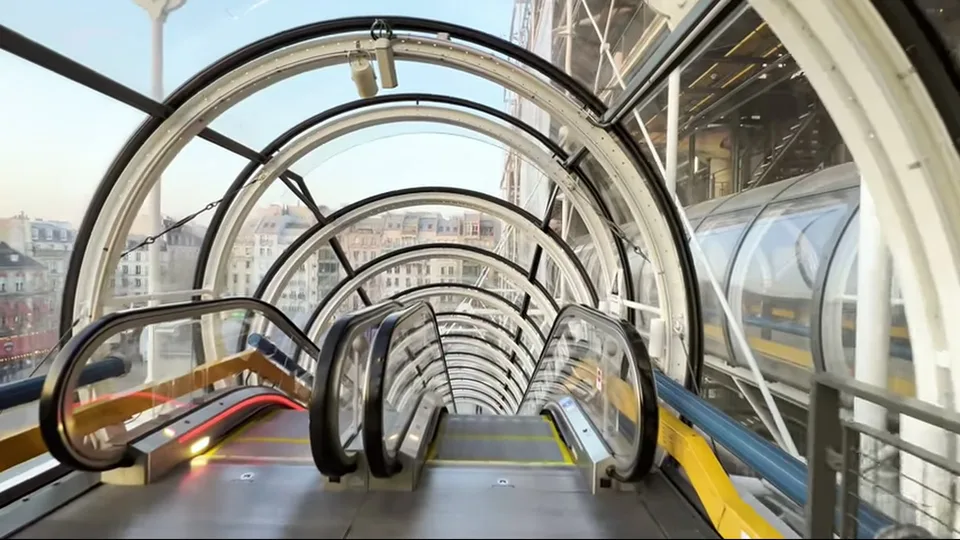
Fast-track and VIP entry for the main building currently provide no real advantage as the museum itself is inaccessible.\n\n• Free option: Facade, Place Georges-Pompidou, Stravinsky Fountain, and a walk through Le Marais.\n• Paid option: Specific temporary Centre Pompidou exhibitions at other venues.\n• Guided tour: Recommended if you are interested in the architecture of Renzo Piano and Richard Rogers rather than just photos.\n\nImportant: A common mistake is buying a ticket from a reseller expecting access to the main museum or the panoramic terrace; no such ticket exists for the historical building at this time.", "timing_advice": "### Best time to go\n\nThe best time for an exterior view is during daylight or early evening to see the color-coded pipes and escalators clearly.

Allow 30–60 minutes for the building and fountain; the previous 2–3 hour estimate only applied to the full museum visit. In sunny weather, photos are best in the soft evening light, though the piazza becomes more crowded.

For a quieter experience, visit in the morning and combine it with a walk through Le Marais.\n\nSolo travelers should aim for the morning, families for the afternoon, and photographers for the evening light. The building is closed on Tuesdays.

Peak season is summer, while the off-peak winter months offer a more relaxed atmosphere on the piazza.", "combo_advice": "### Combos and discounts\n\nCombo tickets for the museum and terrace are currently unavailable.

Paid options should only be considered for separate exhibitions or neighborhood tours where the center is one of several stops. The Paris Museum Pass does not grant access to the closed building. Savings are simple: view the exterior for free and only pay for temporary projects at active venues.

Discounts for children and students are not applicable to the closed main building.", "tour_advice": "### When it makes sense to take a tour\n\nA guide is useful if you want to understand why Centre Pompidou became an architectural scandal and a symbol of 20th-century Paris.

A tour will explain the color-coded engineering systems, the external escalators, and the building's connection to the Marais. A self-guided visit is sufficient if your goal is just to see the facade and take photos.

Modern art lovers should choose specific temporary exhibitions rather than a general tour of the closed building.", "prime_timing": "Best time: Wednesday morning or Thursday 11:00 AM – 1:00 PM. Closed on TUESDAYS. Thursday — open until 11:00 PM (evening visits are excellent). Busiest times: Saturday and Sunday.

The piazza is always lively with street performers, musicians, and artists.", "editorial_note": "Right now, Centre Pompidou works best as an architectural landmark rather than a museum destination.

With the main building closed for a major renovation, the experience is limited to the exterior 'inside-out' facade, the lively Place Georges-Pompidou, and the whimsical Stravinsky Fountain.

It is a practical 30-minute stop while walking between the Marais and Hôtel de Ville, but it will not satisfy those seeking the permanent modern art collection or the famous rooftop views.\n\nThis spot appeals most to photography enthusiasts and fans of high-tech architecture who appreciate the radical design of Renzo Piano and Richard Rogers.

Travelers expecting a traditional gallery visit or an indoor experience will find it incomplete in its current state; for modern art, it is better to seek out the center’s temporary exhibitions currently hosted at other venues across Paris.\n\nPractical Observation: The piazza is a prime spot for street performers and people-watching, but the atmosphere is best enjoyed during daylight when the color-coded pipes and transparent escalators are most striking." } ]

Centre Pompidou facade with red exterior escalators in Paris

🎫 Tickets, tours & discounts

Which ticket to choose

Do not buy a standard Centre Pompidou museum ticket for the Beaubourg building right now: the main museum visit is not operating during the renovation.

For the current Paris stop, the basic option is enough because the value is outside the building: Place Georges-Pompidou, the exposed pipes and ducts, the external escalator tube, and the nearby Stravinsky Fountain.

Paying more only makes sense if the ticket is for a specific off-site Centre Pompidou exhibition at another venue, not for entry into the historic building itself. The common first-time mistake is buying a generic “Pompidou” product expecting the full modern-art collection, rooftop views, and galleries at Place Georges-Pompidou.

  • Best free option: exterior architecture, Beaubourg square, Stravinsky Fountain.
  • Worth paying for: a named temporary exhibition hosted at a separate venue.
  • Skip: fast-track, VIP, or premium entry products for the closed main building.
ImportantTreat this as a 30–60 minute architecture and neighborhood stop, not as a full museum visit.

When to go

There is no peak museum slot to optimize because the main galleries are closed. For the exterior, late afternoon and early evening work best: the facade photographs well, the square has more street life, and it fits naturally before dinner in the Marais or around Les Halles.

Morning is calmer for photos of the building and fountain, but it feels less lively. Midday is fine if you are already walking between Hôtel de Ville, Le Marais, and Les Halles, but it is not worth crossing Paris only for this stop.

Solo travelers should go in the early evening and combine it with the Marais. Families will find late morning easier and less tiring. Photographers should aim for soft light rather than the busiest middle of the day.

Combos and discounts

There is no worthwhile combo ticket built around the main Centre Pompidou building while it is closed. If a platform sells a bundle, judge it by the other attraction or walking tour included, not by promised Pompidou museum access at Beaubourg.

City passes are not a good reason to plan this stop right now. Before closure, under-18s had free museum entry and the main collection ticket was a paid visit in EUR, but those savings do not apply to the closed building experience.

TipThe best “discount” is to keep this free and pair it on foot with nearby places that do not require a Pompidou ticket: the Stravinsky Fountain, Saint-Merri, Rue Rambuteau, Hôtel de Ville, and the Marais.

When a tour makes sense

A guided tour is useful if it is an architecture or neighborhood walk that explains why the building was radical: the inside-out design by Renzo Piano and Richard Rogers, the color-coded services, the Beaubourg plaza, and the building’s role in changing modern Paris. That kind of tour can add context even without gallery access.

Skip a dedicated paid tour if you only want a quick look and a few photos. A self-guided stop is enough for most visitors: arrive by Rambuteau on line 11 or Hôtel de Ville on lines 1 and 11, walk to Place Georges-Pompidou, look at the facade and escalator tube, then continue to the Stravinsky Fountain beside IRCAM.

View tickets

Centre Pompidou terrace with exposed stair structure and Paris skyline
Weather nowOvercast sky
Paris, France
NowOvercast ☁️
Temperature16°C
VisibilityGood
AerosolsClean air · AOD 0.11

Conditions are mixed — plan accordingly and check for covered areas.

AOD — how much dust and haze in the air dim the distant view. 0 clean, >0.4 noticeable, >0.7 heavy.

Crowd indicator

Since the main building is closed for renovation, crowds reflect general pedestrian traffic in the Beaubourg square, peaking on weekends and in the late afternoon.

When to go?

Mini-calculator based on crowd levels by day and time.

Best time at Mon — 10:00

This day is usually calmer than average. This slot has a higher chance of a comfortable visit: Calm; best for unobstructed photos. Weather is currently not ideal: overcast ☁️.

30–50% · Quiet60–80% · Moderate90–100% · Crowded

Nearest days

TodayHeavy weekend pedestrian traffic around the square, especially in the late afternoon.
10:0030%
12:0060%
14:0075%
16:0085%
17:0090%
18:0085%
TomorrowA typical bustling Sunday in the Marais area with consistent afternoon crowds.
10:0030%
12:0065%
14:0080%
16:0085%
17:0085%
18:0075%
Day after tomorrowA much quieter weekday, ideal for a quick, unobstructed look at the facade.
10:0020%
12:0040%
14:0045%
16:0050%
17:0060%
18:0055%
Centre Pompidou facade and entrance with exterior escalator tubes in Paris

How to get there

Nearest stationRambuteau / Hôtel de Ville

How to find the entrance

1
Start at RambuteauExit at Rambuteau on line 11, then walk to Place Georges-Pompidou in about 3 minutes.
2
Or use Hôtel de VilleFrom lines 1 or 11, walk west through the Beaubourg area to the square in about 8 minutes.
3
Head to Beaubourg SquareApproach from the open square on the west side, facing the exposed pipes and escalator facade.
4
Current access noteThe main Centre Pompidou building is closed for restoration, so there is no standard museum entry route now.
ImportantCentre Pompidou’s main Beaubourg building is closed for a major renovation, so there is no normal museum entrance to find here, no full collection visit, and no terrace access. Treat Place Georges-Pompidou, 75004 Paris as an outdoor stop, not as a ticketed museum visit.

Go to the open square in front of the building from Rambuteau metro on line 11 or Hôtel de Ville on lines 1 and 11. The confusing part is that the famous building is still visible, but visitor access is not operating in the usual way; do not spend time looking for a museum queue, cloakroom, escalator entrance, or ticket desk.

Use your time for the exterior: the exposed pipes, the transparent escalator tube, the Beaubourg square, and the nearby Stravinsky Fountain. Allow 30-60 minutes, including photos and a short walk around the area.

Visitors under trees beside Centre Pompidou’s exposed escalator and pipes

Practical limits & what to bring

What to consider before your visit

The main Centre Pompidou building at Place Georges-Pompidou, 75004 Paris is closed for a major renovation, so this is not a full museum visit. There is no useful visitor entrance for the permanent collection, upper-level views, ticket desk, BPI library queue, or normal museum route.

Treat it as a 30- to 60-minute exterior stop: the facade, exposed pipes, transparent escalator tube, Place Beaubourg, and the nearby Stravinsky Fountain.

There is no dress code and no age limit for viewing the building from the square, but comfort is closer to a street stop than a museum visit: you will be outdoors, with limited shelter, uneven paving in places, and crowds around the square and fountain.

The easiest metro stops are Rambuteau on line 11 and Hôtel de Ville on lines 1 and 11. Strollers and wheelchairs work for the square and surrounding streets, but do not plan on an indoor accessible route through the museum building.

ImportantDo not come here with a timed museum-ticket mindset. The main practical loss of time is searching for entrances, queues, cloakrooms, or library access that are not part of the visit now.

What you can and cannot bring

  • A small backpack or day bag is fine for an exterior visit.
  • A water bottle is fine for an exterior visit.
  • Food and drinks are not an issue if you are only using the public square, but there is no indoor museum space here for eating or resting.
  • Large luggage is impractical here because there is no visitor storage service at the main building.
  • There is no active museum security route for a normal visitor visit at this building, so old rules about museum entry, gallery access, and cloakroom screening do not help for this stop.
  • Tripods, bulky camera setups, or filming gear are a poor fit for the crowded square; keep photography handheld and compact.

Storage and belongings

There is no useful visitor cloakroom or locker service for this stop at the main Centre Pompidou building. Do not arrive with suitcases, large backpacks, helmets, or shopping bags expecting to leave them inside; use hotel storage or a luggage-storage service elsewhere in Paris before coming.

Strollers do not need to be checked if you are staying outside on Place Beaubourg and around the Stravinsky Fountain. Pack light: phone, small bag, water, weather layer, and comfortable shoes are enough.

People relaxing on the sloped piazza beside Centre Pompidou

Location and what's nearby

What kind of neighborhood

  • Beaubourg sits between Le Marais and Les Halles: dense, central, walkable, and better for short cultural stops than a single-site museum day.
  • The mood is mixed Paris: medieval lanes, contemporary art crowds, street performers on Place Georges-Pompidou, and heavy weekend foot traffic.
  • It pairs well with old-town culture, design shopping, cafe hopping, and a Seine-side walk toward Ile de la Cite.
  • The main Centre Pompidou building is closed for renovation, so the area works best as a facade stop and neighborhood anchor.

Nearby on foot (up to 15 minutes)

  • Fontaine Stravinsky — playful kinetic sculptures beside Saint-Merri church · 2 min
  • Eglise Saint-Merri — Gothic church with a quiet, lived-in interior · 3 min
  • Tour Saint-Jacques — solitary flamboyant Gothic tower near Rivoli · 8 min
  • Hotel de Ville — grand civic square and Parisian photo stop · 8 min
  • BHV Marais — useful department store for design, fashion, and homeware · 8 min
  • Archives Nationales — elegant courtyards and Marais mansion architecture · 10 min
  • Rue des Rosiers — Jewish-Marais street for falafel, bakeries, and browsing · 12 min
  • Musee Carnavalet — Paris history in two Marais townhouses · 14 min

15-30 minutes by transport

  • Musee du Louvre — obvious next major art stop across central Paris · 15 min by metro
  • Musee d'Orsay — strong contrast: 19th-century art after contemporary architecture · 20 min by metro
  • Saint-Germain-des-Pres — galleries, bookshops, cafes, and Left Bank atmosphere · 15 min by taxi
  • Canal Saint-Martin — relaxed waterside bars and a younger evening scene · 20 min by metro
  • Pere Lachaise — atmospheric cemetery walk with major cultural graves · 25 min by metro

Where to eat nearby

  • Benoit Paris — historic Ducasse bistro and French classics · expensive · reservation essential · 6 min walk
  • L'As du Fallafel — Marais falafel institution · budget · walk-in possible · 12 min walk
  • Les Philosophes — classic Marais bistro cooking · medium · booking recommended · 10 min walk
  • Breizh Cafe Le Marais — Breton crepes and cider · medium · booking recommended · 12 min walk
  • Le Mary Celeste — oysters, cocktails, and small plates · above average · booking recommended · 14 min walk

Ready-made day route

Start at Centre Pompidou for the exterior, Place Georges-Pompidou, Fontaine Stravinsky, and Eglise Saint-Merri, then walk east through Archives Nationales toward Rue des Rosiers.

Stop at L'As du Fallafel for a quick lunch, continue to Musee Carnavalet, and finish with a slower Marais wander around Rue Vieille du Temple. For dinner, choose Benoit Paris if you want the day to end as a classic Paris bistro meal rather than another casual stop.

NoteKeep Place des Vosges for a wider Marais route; it is better added after Musee Carnavalet than squeezed into the immediate Pompidou loop.
Glass-tube escalator descending at Centre Pompidou with Paris buildings beyond
Reference

Facts

Read more

Verified Numbers and Scale

  • Dimensions: 166 m long, 60 m wide, and 42 m high, so the facade reads more like an industrial block than a classical museum.
  • Floor plates: 10 levels of 7,500 m² each, built for flexible interiors instead of fixed gallery rooms.
  • Collection space: 12,210 m² was devoted to the Musée national d’art moderne collection, making the closure a major gap for art travelers.
  • Exhibition space: 5,900 m² was used for temporary shows, so the building functioned as more than a permanent-collection museum.
  • Library scale: the Bpi occupies 10,400 m² and was designed for up to 2,200 readers, explaining the building’s mixed cultural role.
  • Competition: 681 projects from 49 countries entered the design contest, unusually global for a Paris public building.
  • Renovation budget: €262 million is allocated to the current overhaul, centered on asbestos removal and technical modernization.

Myths and Misconceptions

  • Myth: Centre Pompidou was designed by a French starchitect. Actually: the winning team was led by Renzo Piano and Richard Rogers.
  • Myth: The colored pipes are playful decoration. Actually: the colors identify functions such as air, water, electricity, and circulation.
  • Myth: The Paris building still works as a full museum. Actually: the main Beaubourg building is closed for a complete renovation.
  • Myth: It is a brutalist concrete monument. Actually: it is high-tech architecture built around exposed steel, glass, and services.
  • Myth: Pompidou is simply another name for Beaubourg. Actually: Beaubourg is the neighborhood nickname; Georges Pompidou was the president behind the project.

Rare and Unusual

  • The red exterior escalator is nicknamed the “caterpillar,” because it climbs the facade inside a transparent tube.
  • Blue marks air circulation, green marks water, yellow marks electricity, white marks cooling towers, and red marks circulation and safety systems.
  • The huge open piazza was part of the architectural concept, not leftover space; it was meant to pull street life toward the building.
  • IRCAM, the linked music and acoustics institute, sits largely underground beside the museum to escape city noise.
  • The Stravinsky Fountain next door has 16 moving sculptures by Jean Tinguely and Niki de Saint Phalle, placed above IRCAM spaces.
  • The building was nicknamed “Notre-Dame of the Pipes” by early critics before becoming one of Paris’s best-known modern landmarks.
Background

History

Read more

The Centre Pompidou was created to give modern and contemporary art a home in the middle of Paris, not behind palace walls but in a building that looked radically new from the street. Its exposed pipes, structure and escalators turned the museum itself into a public spectacle, which is why even people who never enter a gallery still know the façade.

That idea still shapes the visit today: Pompidou matters as much for how it changed the image of a museum as for the art it shows. It made contemporary culture feel open, urban and public, with the forecourt, the long escalator tube and the rooftop views all becoming part of the experience.

Right now, the main building is closed for a long restoration, so its historical importance is easier to read from the outside than through a full museum visit.

Even so, standing on Place Georges-Pompidou helps explain why this site remains a landmark of modern Paris: it is one of the rare museums where architecture, city life and art were designed to be seen together.

View from Centre Pompidou toward church tower and layered Paris rooftops

♿ Accessibility & families

Accessibility & family policy

  • Current access: the Centre Pompidou’s main Beaubourg building in Paris is closed for major renovation, so the museum galleries, rooftop views, public escalator route, lifts, cloakrooms, Children’s Gallery, and usual visitor services are not operating there. Centre Pompidou exhibitions and family activities continue through off-site partner venues, where access conditions follow the host venue.
  • Wheelchair and reduced-mobility visitors: for the closed Beaubourg building, there is no public museum route to plan around. When choosing a relocated Centre Pompidou exhibition in Paris, use the host venue’s step-free entrance, lift, seating, and wheelchair-loan arrangements rather than the Beaubourg building’s former access setup.
  • Strollers and young children: strollers cannot be used for a Beaubourg visit while the building is closed. For off-site Centre Pompidou programming, stroller access and cloakroom rules are set by each venue; large museums in Paris may require folding strollers in crowded galleries.
  • Tickets and children: the Centre Pompidou’s standard museum admission has offered free entry for under-18s, and visitors with disabilities have had free admission with one companion. For relocated exhibitions, pricing and free-entry rules are attached to the specific venue and event, so families should budget per exhibition rather than assuming one fixed Centre Pompidou ticket.

🏢 On-site amenities

On-site amenities

  • Restrooms: The Centre Pompidou building in Beaubourg is closed for renovation, so the museum restrooms are not accessible. There are no toilets available inside the galleries, escalator route, or observation areas because those areas are closed to visitors.
  • Café / restaurant: The on-site dining inside the building is closed, including Le Georges, the premium rooftop restaurant. There is no café service inside the museum building.
  • Shop: The Centre Pompidou museum shop and bookshop inside the building are closed. When open, they focus on art books, design objects, exhibition catalogues, posters, stationery, and gifts.
  • Wi‑Fi, water, family facilities: Public museum Wi‑Fi, water fountains, baby-changing areas, nursing spaces, and any quiet rooms inside the Centre Pompidou are not available to visitors while the building is closed. The nearby Beaubourg and Marais area has cafés and public facilities within a short walk.

Reliability & freshness

UpdatedJune 5, 2026

I live in Paris and, after seven years here, I write clear guides on transport, costs, neighbourhoods, and daily travel details.